
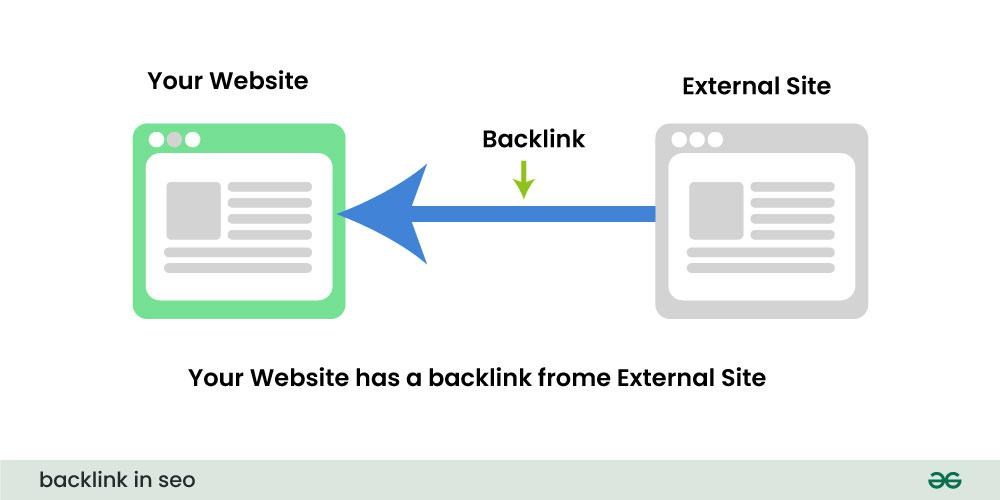
Before starting to read and understand backlinks, first of all, it is a part of off-page SEO activities, and it helps build the authority of your website. Backlinks simply mean that someone is linking you back from their domain.
Yes, that’s true backlinks help you build the authority but only if you are getting them from the quality of a high-authority website. Creating backlinks from irrelevant or low-quality websites can damage your current authority as well. So make sure all websites are relevant and authoritative before starting link building.
A technical definition is “Backlinks are links from other websites that point to your site. They act as signals of trust and authority, similar to how citations or recommendations work in the real world.”
“A real-life scenario: backlinks are like references, and quality backlinks are similar to a high-authority profile referring to you. For example, if you start your own startup and a well-known business personality refers to you, it is much better than any random person talking about your startup.”
What Are Backlinks?
Backlinks are an important part of SEO because they pass “link juice” [a type of score or authority of current domain] from one website to another. This helps search engines understand which sites are trusted and worth ranking higher. Everyone talks and even google is also confirmed that backlinks are still a ranking factor in SEO.
The value of a backlink depends on where it comes from. A link from a well-known, trusted website is far more powerful than one from a small or low-quality site. High-quality links act like strong recommendations and help your site build credibility, making it easier to rank well in search results.
The Hierarchy of Link Value: Quality over Quantity
Once there was a time before Panda (April 24, 2012) when the goal was only getting backlinks, no matter where they were coming from. SEOs were only focusing on increasing the number of backlinks for their website, and search engines were ranking them. But after the Panda update, an evolution came in backlink-based SEO, and most spammy websites got punished. Then people realized the value of quality backlinks.
After that a new era of SEO started,
Modern search algorithms now focus more on the quality and variety of backlinks rather than just the total number. Research shows that the number of unique websites linking to a domain called referring domains has a stronger impact on Google rankings than simply having lots of links.
This shift shows that search engines look for broad trust. They want to see different reputable websites agreeing that your content is valuable, instead of many links coming from the same place. That’s why getting 100 links from 100 strong, relevant websites is far more effective than getting 1,000 links from a single domain.
Quality backlinks also provide another advantage: they can send direct, relevant traffic to your site, helping build brand awareness and engagement. A link that doesn’t pass any authority or bring useful traffic doesn’t hold much strategic value in the long run.
A Short History of Link Rankings
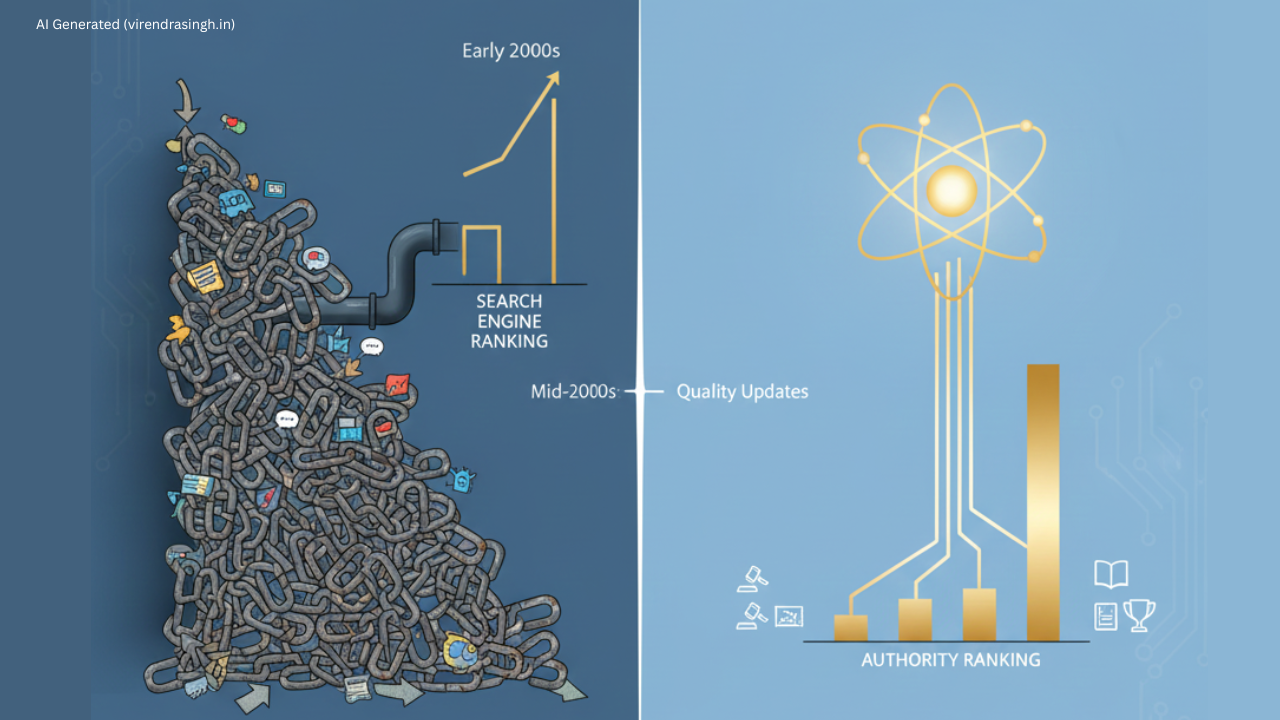
The importance of links in search engine algorithms is rooted in the foundational technology of modern web search, which quickly led to an arms race between webmasters attempting to manipulate rankings and engineers attempting to refine quality signals.
The idea of measuring website authority through links began with Google’s launch in 1998. Larry Page and Sergey Brin introduced the PageRank algorithm, which looked at how many websites linked to a page and how trustworthy those linking sites were. The logic was straightforward: important and valuable websites naturally attract more links.
This concept was inspired by academic citation systems, where research papers gain credibility when others reference them. PageRank adapted that idea to the web, turning links into a signal of trust and authority.
Even today, the core principle behind PageRank remains relevant, although Google now uses a much more advanced and complex ranking system. All PageRank-related patents expired in 2019, making the idea even more universal.
In the early 2000s, search engines often put more weight on the number of backlinks instead of their quality. Because of this, many SEOs focused on collecting as many links as they could, regardless of relevance or value. This resulted in a period where increasing link volume became the main strategy.
During this time, manipulative techniques became widespread. Link farms, low-quality directories, mass reciprocal linking, and comment spam were commonly used to artificially boost backlink numbers. These shortcuts made it easy to game early search algorithms and pushed the system to its limits.
As these tactics spread, search engines had to respond. The rise of spammy link practices led to the development of more advanced algorithms and strict quality updates. These updates shifted the focus from quantity to quality, rewarding websites that earned genuine, relevant, and trustworthy backlinks.
How Google Updates Transformed Link Building
Google later introduced updates to crack down on fake or manipulative backlinks. These changes pushed SEOs to focus on earning genuine, high-quality links. It also meant that managing risk became an important part of every link-building strategy.
The Penguin Update (2012 onwards)
The Google Penguin Update, launched in 2012, was a major shift in how Google judged backlinks. Its main goal was to catch and penalize sites using spammy or low-quality links. Instead of rewarding link quantity, Google started focusing on link quality, relevance, and authenticity.
Penguin also cracked down on over-optimized anchor text. Using too many exact-match keywords in links became a clear sign of manipulation, pushing site owners to use more natural anchor text.
In 2016, Penguin 4.0 became part of Google’s core algorithm, allowing Google to check link quality in real time. This means any risky or spammy links can hurt rankings at any time, so regular link audits are essential.
Overall, Penguin changed the cost–benefit equation for link building. Cheap or black-hat link schemes may offer quick results, but they now carry a high risk of severe penalties. Sustainable, high-quality link building is the only safe long-term approach.
Core Updates and the E-E-A-T Imperative
Google’s regular Core Updates, including older systems like Panda, keep raising the bar for content quality and authority. Recent updates like the March 2025 Core Update continue to push for content that is authentic, useful, and genuinely helpful to readers.
These updates make it clear that strong content naturally attracts strong links. When content is valuable and user-focused, it becomes more link-worthy. But if the content is thin, manipulative, or low-quality, it won’t earn organic links and can’t hold onto any artificial link equity for long.
In simple terms, high-quality content (aligned with E-E-A-T) and ethical link building now go hand in hand. Both are essential for long-term SEO success.
The Disavow Tool in the Modern Era (2025)
The Disavow tool is now meant only for rare, high-risk situations. Google’s own systems like SpamBrain are already very good at ignoring bad or spammy links on their own, so most toxic links don’t require any action from your side.
You should only use the Disavow tool if your site has received, or is at real risk of receiving, a manual action because of aggressive link schemes or clear negative SEO. It’s a last-resort option because disavowing good links by mistake can seriously hurt your rankings.
Since Google filters most bad links automatically, manual disavows are needed only in exceptional cases where there’s an obvious violation that triggers a human review.
How Search Engines Judge Link Quality Today
In today’s SEO, evaluating links means looking beyond basic metrics. The focus is now on quality factors like relevance, context, and how naturally a link fits within the content.
Understanding Domain and Page Authority
Metrics like DA (Moz), DR (Ahrefs), and Authority Score (Semrush) are helpful for estimating a site’s strength, usually measured on a 0–100 scale. Scores around 50–60 are considered good, and anything higher is strong.
But relying on just one metric can be misleading. A site may have a high DR but still lack good content, technical health, or relevant context. That means the link may not pass much value.
That’s why experienced SEOs evaluate links using multiple factors DA/DR, organic traffic, trust signals, and how closely the linking page matches the topic. This gives a clearer and more reliable picture of link quality.
Contextual Relevance
A backlink’s quality mainly depends on two things: relevance and placement.
The linking site should be related to your niche; irrelevant or low-quality links can look manipulative and may cause problems. Placement also matters. Links placed naturally within the main content of a page (editorial links) are far more valuable than links in footers, sidebars, or long lists.
When a link sits inside meaningful content, it supports the topic and helps search engines understand why it’s relevant. In short, the more natural and useful the link placement, the more value it’s likely to pass.
Anchor Text and Why Variety Matters
Anchor text, the words used in a link—is still an important signal, but it needs to look natural. Overusing exact-match keywords can appear manipulative and may trigger search engine scrutiny.
A natural backlink profile uses a mix of anchor types. Current SEO practice suggests a healthy balance: mostly branded anchors, some generic phrases like “click here,” some plain URLs, and only a small percentage of exact-match keywords. Diversifying anchors helps reduce risk and keeps your link profile looking organic.

Link Attributes as Intent Signals
Since 2005, Google has used link attributes (rel tags) to understand what type of link it is and to reduce spam. The rel=”nofollow” tag, once a strict command, is now treated more as a strong hint.
To give clearer signals, Google later added two more attributes:
- rel=”sponsored” — used for paid, sponsored, or commercial links. This is required so Google doesn’t treat these as natural links.
- rel=”ugc” — used for links in user-generated content, like comments or forum posts.
These tags can also be combined (for example, rel=”sponsored nofollow”). Using them correctly helps Google understand the intent behind each link and keeps your site safe and compliant.
Moving From More Links to Better Links
Outdated Tactics (High Risk)
Many older link-building methods are now unsafe and can lead to penalties. These include
- PBNs and Link Farms: These artificial networks violate Google’s guidelines and are regularly targeted, making them unreliable.
- Buying Links Without Proper Tags: Paid links without the rel=”sponsored” tag can trigger manual actions, and many of these links disappear quickly.
- Mass Submissions: Low-quality directories, bulk reciprocal links, and forum spam no longer work and are seen as manipulative.
Modern Link Earning (Sustainable)
- Today’s approach focuses on creating content people want to link to and building real relationships.
- Digital PR & Thought Leadership: Creating newsworthy content, original data, or industry research naturally attracts media links. Tools like HARO can help secure coverage from reputable sites.
- Content for Authority: Publishing strong resources—guides, tools, and helpful content—makes your site a natural reference for others.
- Link Reclamation: Finding unlinked brand mentions and politely requesting a link is a simple, high-ROI tactic.
- Relationship-Based Outreach: Personalized outreach that offers real value (such as reporting a broken link) helps build long-term relationships with authoritative sites.
Comparative Analysis: Traditional vs. New Era Link Building
The shift in link building becomes clear when you compare how old SEO tactics worked versus how modern strategies operate. The differences show up in how links are built, the level of risk involved, and the long-term value they deliver.
Table: Traditional Link Building vs. Modern Link Earning
| Factor | Traditional SEO (Pre-Penguin Focus) | New Era SEO (Post-E-E-A-T & AI Focus) |
| Primary Goal | Quantity of links, achieving specific exact-match anchor text percentages. | Earning editorial authority; driving relevant referral traffic, establishing E-E-A-T. |
| Strategy Focus | Link farms, PBNs, automated directory submissions, mass reciprocal linking. | Digital PR, original data/research creation, HARO, unlinked mention reclamation, personalized outreach. |
| Key Metric Used | Raw link count; Toolbar PageRank; DA/DR (as standalone scores). | Relevance, Contextual Placement, Organic Traffic Potential, Referring Domain Diversity, Spam Score. |
| Anchor Text Approach | Aggressive Exact-Match keyword stuffing (high percentage). | Diverse, natural profile (Branded focus, low Exact-Match percentage). |
| Associated Risk | Extremely High: High probability of algorithmic or manual penalty, site de-indexing. | Low to Moderate: Risk is primarily sunk cost if content fails to attract links; low penalty risk. |
| Longevity/ROI | Short-term gains, high maintenance, unstable, requires continuous defense. | Slower initial accumulation, compounding long-term value, highly sustainable authority. |
The Future of Visibility: Backlinks in the Age of Generative AI
With the rise of Large Language Models and Google’s AI-driven search (SGE), online visibility is entering a new phase. Search is moving beyond links and rankings and shifting toward direct, AI-generated answers. This makes content authority more important than ever.
The Shift: From Links to Answers
Generative AI changes how people use search. Instead of clicking multiple links, users often get a complete answer directly on the results page. This “zero-click” environment challenges the old model where top-ten rankings guaranteed visibility.
AI Citations: The New Form of Backlink Value
In this new landscape, the real measure of authority is whether AI tools cite your content as a trusted source. When an AI Overview or chatbot references your site, that mention acts as a high-value “AI citation.”
Quality editorial backlinks still matter—they help search engines and AI models understand your expertise. Links from relevant and trusted sites strengthen your content signals, making it more likely to be used as evidence in AI-generated answers.
E-E-A-T as the Foundation for AI Trust
To earn AI citations, your content must show clear experience, expertise, authority, and trust. AI systems rely on sources that are accurate, well-written, and verifiable.
Google confirms that you don’t need special tactics for SGE—just follow the same high-quality content guidelines. Strong backlinks, structured content, and clean page architecture make it easier for AI to understand and cite your work.
Conclusion: Authority Is the Future
Backlinks are not becoming less important—they are becoming more meaningful. The focus has shifted from collecting large numbers of links to building real trust and authority.
Ethical strategies like Digital PR, research-driven content, and helpful resources deliver long-term value. Black-hat tactics may create quick gains but carry high risks and rarely last.
In the future, SEO success will be measured not only by rankings or DR but by:
- The quality of referral traffic
- Brand influence
- The frequency of being cited as a trusted source by AI systems
- The sites that consistently earn genuine, authoritative links—and build strong trust signals—will lead in the age of generative search.