

The question of whether “SEO is dead” is perhaps the most enduring cliché in digital marketing. Every time search engines roll out a major update, the chatter begins anew, often shouted loudest by those who relied on tactics that Google just eliminated. This report demonstrates that the discipline of Search Engine Optimization (SEO) has never died; instead, it has continually evolved, forcing the industry to mature from a collection of technical tricks into a sophisticated, multi-faceted discipline essential for navigating the current AI-driven web.
The history of SEO is a history of adaptation. Every major algorithmic shift, far from killing SEO, has simply killed bad, manipulative, or short-sighted practices, forcing professionals to become true specialists focused on providing the best possible user experience.
1. Introduction: The Constant Rebirth of Search Engine Optimization

The declaration that “SEO is dead” is a predictable, cyclical reaction that has happened repeatedly whenever search engines introduce significant changes designed to clean up their results. For over two decades, optimization professionals have observed practitioners who relied on exploiting algorithm loopholes fail, only to then declare the entire industry obsolete.
The enduring thesis is that SEO never truly dies. Instead, the focus shifts, and only manipulative tactics become extinct. Every major update enforced by Google has been a strategic effort to move closer to providing better user experiences, forcing the optimization community to mature from seeking quick tricks to implementing strategic digital specialization.
The history of SEO can be broken down into seven distinct phases, reflecting major shifts in search engine technology and optimization practices. These phases chart how websites have constantly competed for visibility online:
- The Stone Age of SEO (1990–1995)
- The Wild West of SEO (1995–2000)
- The SEO Gold Rush (2000–2005)
- The Industrial Revolution of SEO (2005–2010)
- The Dark Ages: Google’s Great Purge (2010–2015)
- The SEO Renaissance (2015–2020)
- The AI Revolution (2020–2025)
By examining the historical shifts, it becomes clear that the discipline of SEO is defined by its ability to adapt and incorporate new technologies rather than collapse in the face of change.
2. The Wild West and the First Great Filter (1995–2010)
This section covers the explosive growth of the web, the early reliance on simple algorithms, and Google’s first attempt to enforce order, which triggered the first widespread cries of “SEO is dead.”
The Birth of SEO (Mid-1990s)
The history of SEO officially begins around 1997. The impetus for the field was simple: realizing that search engine placement determined visibility and potential revenue. An often-cited anecdote involves the manager of the rock band Jefferson Starship, who was reportedly upset to find the band’s website buried on page four of the search results. The immediate response from the site builders was a rudimentary optimization attempt: stuffing the band’s name onto the page a few more times. With this initial, basic tactic, the field of search engine optimization was born.
This early period, encompassing the Wild West and Gold Rush eras (1995–2005), was defined by hyper-basic tactics. Early search engines relied heavily on simple metrics, such as keyword density. Optimizers quickly learned that repeating the desired keyword on the page often excessively, a technique known as keyword stuffing—was highly effective. These primitive techniques were highly exploitable, making the early 2000s an era of seemingly easy rankings.
The Shockwave: The Florida Update (November 2003)
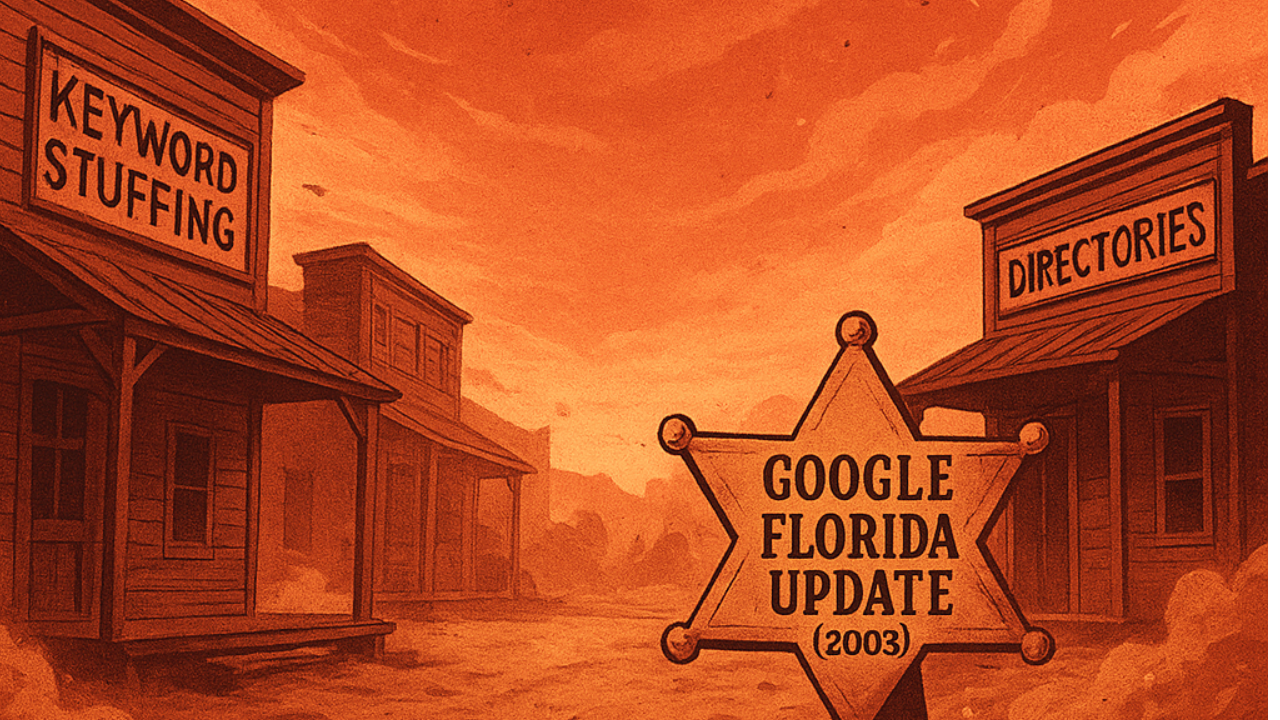
The confidence of the early optimization community was severely tested by Google’s first major crackdown: the Florida Update. This modification to Google’s ranking algorithm went into effect in late November 2003. It was a broad, significant change, implementing filter mechanisms that caused a “massive change of the Google ranking positions of websites”.
The Florida Update initiated Google’s long process of moving away from pure keyword density toward conceptual relevance. Sites that had relied heavily on simple keyword spamming and content manipulation were hit hard. The update was so disruptive to the industry that technical experts began referring to it unofficially by the name of a hurricane, signifying the massive turbulence it caused.
The destruction of these accepted, wide-scale optimization practices created the necessary environment for the first death prophecy.
The Prophecy of 2005: The First Obituary
In 2005, web entrepreneur Jeremy “ShoeMoney” Schoemaker popularized the phrase “SEO is dead”.
Schoemaker’s argument was that search engines were improving so rapidly that any current ranking success would soon be detected and penalized by the algorithms: “the search engines are improving at such a rapid pace. You may be able to rank for x or y #1 tomorrow but eventually you will get called out by Google or Yahoo”.
This widespread panic marked the death of “textbook SEO techniques” that relied on simple exploitation, not the death of the discipline itself. The historical pattern shows that the death narrative is consistently rooted in fear of algorithm enforcement, not technological obsolescence.
The contradiction to this early narrative came directly from Google. In 2010, Google released the Search Engine Optimization Starter Guide. If Google genuinely intended to eradicate SEO, they would not provide an official guide detailing how to ethically optimize a website for their search engine. This confirmed that Google sought helpful, compliant SEO, not its elimination.
3. The Great Quality Purge: Algorithms Define Modern Standards (2011–2015)
This era, known as the Dark Ages (2010–2015) to some, cemented the shift from ranking based on simple signals (like keywords) to ranking based on deep quality and authority signals (content, links, user intent).
3.1. Panda: The Content Quality Revolution
Google needed a systematic way to address the flood of low-quality, aggregated, or thin content dominating the SERPs. The answer was Panda.
- Launch Date and Goal: Panda 1.0 launched on February 23, 2011. Its primary goal was to drastically reduce the ranking visibility of “low-quality” websites, often referred to as content farms or aggregators.
- The Shift: Panda forced SEO professionals to fundamentally pivot their strategies, emphasizing content quality over content quantity. The algorithm judged a site’s quality based on its overall architecture, making internal site health crucial. This required businesses to invest heavily in original, valuable content creation.
- Integration: Panda was continuously updated (14 times in 2012 alone) and was eventually incorporated into Google’s core algorithm by
January 11, 2016. This means that quality assessment became an inherent, continuous part of ranking, demanding constant vigilance from site owners.
3.2. Penguin: The Link Authority Reckoning

With content quality addressed by Panda, Google turned its focus to link manipulation. The Penguin update targeted artificial authority.
- Launch Date and Goal: Google Penguin was announced on April 24, 2012. It targeted websites violating Google’s guidelines by using manipulative “link schemes” and artificial link building to inflate their ranking.
- The Shift: Penguin effectively killed the industrial-scale purchase and automation of low-quality backlinks (Grey Hat SEM). It forced SEOs to focus on genuine, earned link authority and required massive manual cleanups of toxic link profiles for penalized sites.
3.3. Hummingbird: The Semantic Shift
Hummingbird represented a massive leap in Google’s understanding of human language.
- Launch Date and Goal: Hummingbird, a significant algorithm overhaul, was announced on September 26, 2013. The name reflected its goal: speed and accuracy in interpreting queries.
- The Shift to Intent: This was the most dramatic change since 2001. It moved Google beyond looking at individual keywords to considering the
context and meaning of the entire natural language query. - Impact: Hummingbird made “natural writing rather than forced keywords” paramount, ensuring that content answers the user’s comprehensive intent rather than simply matching exact phrases.
The sequential release of Panda, Penguin, and Hummingbird systematically dismantled the three pillars of old-school manipulation (low-cost content, fake links, and exact-match keywords). This forced the industry to adopt a holistic approach focused on high-quality, authoritative, and semantically relevant content.
Landmark Google Algorithm Shifts and Their Impact
| Update Name | Date (Initial Launch) | Primary Target | Drastic Shift in Strategy |
| Florida | November 2003 | Keyword Spam/Affiliates | Moved away from pure density; forced focus on true content relevance. |
| Panda | February 23, 2011 | Low-Quality Content/Content Farms | Shifted focus from content quantity to holistic site quality and architecture. |
| Penguin | April 24, 2012 | Manipulative Link Schemes (Grey Hat) | Established earned authority as paramount; required focus on genuine link building. |
| Hummingbird | September 26, 2013 | Exact Match Keywords/Query Processing | Shifted focus to semantic search, context, and understanding deep user intent. |
| RankBrain | October 2015 | Unknown/Novel Queries | Introduced machine learning to interpret complex human language and conceptual relationships. |
4. The AI Revolution and the Experience Mandate (2015–Present)
The most recent phase highlights the absolute necessity of robust technical optimization and established trust signals (E-E-A-T) to serve an increasingly complex, AI-driven search landscape.
4.1. The Rise of Machine Learning: RankBrain (October 2015)
RankBrain was launched in October 2015, marking the introduction of machine learning into Google’s core algorithm.
RankBrain was designed to help Google process the approximately 15% of queries entered each day that the search engine had never seen before. The program learns by watching user behavior, determining the conceptual meaning behind the query, and predicting the information users seek. It quickly became the third most important ranking signal (after content and links). The rise of RankBrain requires optimization professionals to focus heavily on comprehensive, contextually rich content that satisfies user behavior and intent prediction.
4.2. Mobile Takes Over: Mobile-First Indexing (2016–2019)
As mobile web usage surged, Google determined that search results must reflect the content users actually saw on their phones.
- Timeline: Testing began in November 2016. By July 1, 2019, Mobile-First Indexing became the default for all new websites.
- The Shift: This change meant Google’s rankings were based primarily on the mobile version of a site. This made mobile optimization (site speed, responsive design) a non-negotiable technical SEO requirement. This change validates that optimization is fundamentally about aligning site technicals with majority user behavior.
4.3. The Trust Pillars: E-E-A-T and Core Web Vitals
The modern algorithms solidified the focus on holistic trust and user experience.
- E-E-A-T: Google’s Quality Rater Guidelines were enhanced to include Experience (the first ‘E’) alongside Expertise, Authoritativeness, and Trustworthiness. Optimization for E-E-A-T involves creating content that demonstrates first-hand experience and builds genuine trust. The current environment rewards the creation of a brand that demonstrates clear authority , forcing optimization to address the whole business ecosystem.
- Core Web Vitals (CWV): CWV formalized user experience (UX) as a primary ranking factor. CWV measures key factors like Largest Contentful Paint (LCP), Cumulative Layout Shift (CLS), and First Input Delay (FID). Optimization for CWV highlights that success in search rankings is a synergy between content quality and technical performance, ensuring that technical SEO remains absolutely critical.
5. The Symbiotic Engine: Why Foundational SEO Powers the Future

SEO is not merely surviving the AI Revolution; it is the technical and authoritative foundation upon which new search modalities must build to succeed. Specialized fields like GEO, AEO, and AIO are simply advanced applications of core SEO principles.
5.1. SEO and Answer Engine Optimization (AEO)
AEO focuses on optimizing content to be selected for zero-click results, such as Featured Snippets and voice search answers. It is about getting chosen by the machine, not just getting found.
For content to be chosen, it must be technically sound, semantically obvious, and easily parsed by the search engine’s systems.
- Structured Data: Implementing schema markup (like FAQ, HowTo, and Article) is crucial as it enhances machine readability and helps content surface in rich results.
- Technical Health: Technical SEO is necessary to ensure the site is fast, crawlable, and structured correctly, which aligns with how search engines evaluate content for featured answers. AEO demands an intent-first content strategy built on a technically sound foundation.
5.2. SEO and Geographical Optimization (GEO)
Geographical Optimization (GEO) focuses on leveraging location-based services and user proximity to deliver relevant local results, a critical need driven by the rise of mobile devices.
- GMB and Local Content: GEO relies on traditional SEO practices such as local keyword research, creating location-specific content, and, crucially, optimizing the Google Business Profile (GMB).
- Local Schema: Implementing a local business schema provides search engines with detailed information such as addresses and operating hours that significantly boosts exposure in local search. GEO proves that traditional SEO ensures content is discoverable, while GEO enhances its contextual relevance.
5.3. SEO and AI Optimization (AIO)
AI Optimization (AIO) involves tailoring content to be accurately ingested and synthesized by generative AI models (LLMs) used in search results. AI systems prioritize authoritative, accurate information over content that is merely popular.
- Authority and Expertise: Strong traditional SEO practices, particularly establishing topical expertise and building brand recognition (E-E-A-T), form the absolute foundation for effective AI optimization.
- Structured Data and Clarity: AI search engines prioritize clarity and context. Structured data is critical because it forms the foundation for the Knowledge Graphs that AI systems rely on to interpret information accurately.
- Data Quality: The “Garbage In, Garbage Out” principle governs AI. SEO’s focus on clean, structured, authoritative input ensures that AI models (especially those using Retrieval-Augmented Generation, or RAG) generate accurate, relevant answers. This requires building AI optimization capabilities directly on existing SEO expertise.
SEO as the Core Foundation for Next-Gen Optimization
| Optimization Type | Goal | How Foundational SEO Principles Support It |
| Traditional SEO | Ranking visibility for broad informational keywords. | Authority building (E-E-A-T), crawlability, content depth, technical health. |
| Geographical Optimization (GEO) | Capturing local, high-intent user traffic near a physical location. | Local keyword research, Google Business Profile (GMB) optimization, Location-specific Schema markup.22 |
| Answer Engine Optimization (AEO) | Securing zero-click results (Featured Snippets, Voice Search answers). | Structured data (FAQ/HowTo), intent-first content, concise answer presentation.19 |
| AI Optimization (AIO) | Being cited accurately by Generative AI and LLMs. | E-E-A-T (Authority/Trust), structured data for machine readability, comprehensive topical coverage.24 |
6. Conclusions: The Constant Need for Interpretation
The analysis of SEO history confirms that the profession is not subject to technological obsolescence but rather continuous evolution. The core skill of the SEO professional interpreting the gap between evolving user need and complex machine delivery is increasingly indispensable.
The historical pattern is one of adaptation being mistaken for extinction. Every “death” prophecy (from 2005 to the post-Panda panic) marked the professionalization of the discipline, forcing a focus on sustainable, long-term content and authority strategies.
The future vitality of SEO is guaranteed by three facts:
- The Web is Dynamic: Google notes that search results are inherently dynamic because user expectations and the open web itself are constantly changing. SEO is the continuous process required to mediate this flux.
- Authority is Scarce: In a world flooded by easily generated content, human-driven elements like original experience and verifiable authority (E-E-A-T) are necessary trust signals. SEO provides the framework for building and communicating this authority.
- Machines Need Translators: Even advanced AI requires clean, structured input to function effectively, following the “Garbage In, Garbage Out” rule. SEO professionals provide the technical bridge between human content creation and machine comprehension, especially through meticulous technical SEO and structured data implementation.
SEO is not a static list of tactics; it is a dynamic, complex process that has survived multiple paradigm shifts and algorithm purges. As long as people use search engines, professionals will be needed to optimize content for them. The death of SEO has, historically, always been greatly exaggerated.
Works cited
- The Many “Deaths” of #SEO Up Until 2015 | SEJ, accessed September 29, 2025, https://www.searchenginejournal.com/many-deaths-seo-2015/123311/
- The Evolution of SEO: From the Stone Age to the AI Revolution | Amsive, accessed September 29, 2025, https://www.amsive.com/insights/seo/the-evolution-of-seo-from-the-stone-age-to-the-ai-revolution/
- A Detailed Timeline of SEO History: How SEO Has Evolved, accessed September 29, 2025, https://torquemag.io/2020/12/seo-history-timeline/
- Florida Update – Ryte Wiki – The Digital Marketing Wiki, accessed September 29, 2025, https://en.ryte.com/wiki/Florida_Update/
- Google’s Florida update – what really happened – WebWorkshop, accessed September 29, 2025, https://webworkshop.net/florida-update/
- SEO Starter Guide: The Basics | Google Search Central | Documentation, accessed September 29, 2025, https://developers.google.com/search/docs/fundamentals/seo-starter-guide
- A Complete Guide to the Google Panda Update: 2011-21 – Search Engine Journal, accessed September 29, 2025, https://www.searchenginejournal.com/google-algorithm-history/panda-update/
- Google Panda – Wikipedia, accessed September 29, 2025, https://en.wikipedia.org/wiki/Google_Panda
- A Complete Guide to the Google Panda Algorithm Update launched 13 years ago, accessed September 29, 2025, https://www.hocalwire.com/blog/a-complete-guide-to-the-google-panda-algorithm-update-launched-13-years-ago-1294504
- Google Panda algorithm update: Everything you need to know – Search Engine Land, accessed September 29, 2025, https://searchengineland.com/google-panda-update-guide-381104
Disclaimer: This article was originally ideated and written by Virendra Singh, an SEO professional with 6+ years of industry experience, an Udemy Instructor, and the creator of Marketing & Mind. The final content was refined and enhanced using Artificial Intelligence.