For the last two years, one question has dominated SEO conferences, LinkedIn discussions, and marketing meetings:
“Will AI replace SEO?”
For SaaS companies, the fear is even greater.
ChatGPT answers questions directly. Google AI Overviews summarize content without requiring clicks. Perplexity compares software products in seconds. Buyers can now ask AI tools to create vendor shortlists before visiting a single website.
If AI can research, compare, summarize, and recommend products, what happens to SaaS SEO?
The short answer:
SEO is not disappearing. The SaaS buying journey is changing.
The biggest mistake many marketers make is assuming AI is replacing search. In reality, AI is changing how people discover, evaluate, validate, and purchase software.
The SaaS funnel still exists.
But it looks very different from the funnel most SEO teams were optimizing just a few years ago.
This article explores how AI is reshaping every stage of the SaaS SEO funnel, the myths surrounding AI and SEO, and what SaaS marketers must do to remain visible in an AI-first world.
The Data Behind the Shift
Before discussing strategy, let’s look at what the research tells us.
What Recent Studies Are Showing
Research Finding
Impact on SaaS SEO
Buyers increasingly use AI during product research
AI becomes part of the discovery process
AI-generated answers reduce clicks for many informational searches
Traffic becomes a weaker success metric
Vendor comparisons are increasingly performed by AI tools
Consideration stages are compressed
Buyers still seek human validation before purchasing
Trust remains essential
Brand mentions influence AI recommendations
Visibility expands beyond rankings
One of the most interesting findings comes from Gartner’s B2B Buyer Survey, which found that buyers increasingly use generative AI during the purchasing journey while still relying on human validation before making decisions.
This tells us something important:
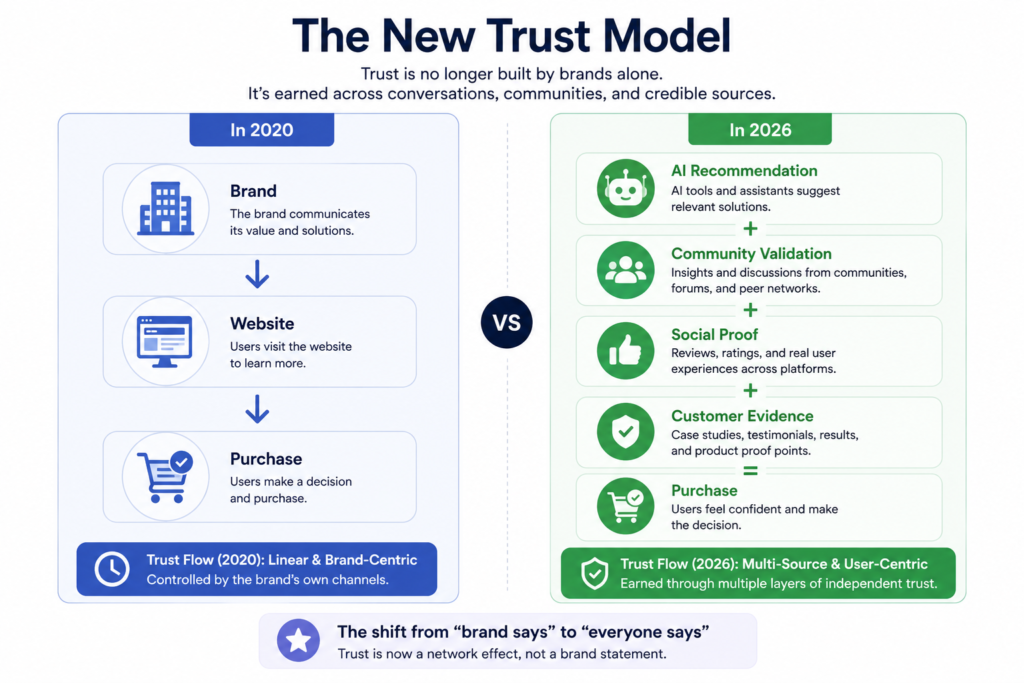
AI is accelerating research, not replacing trust.
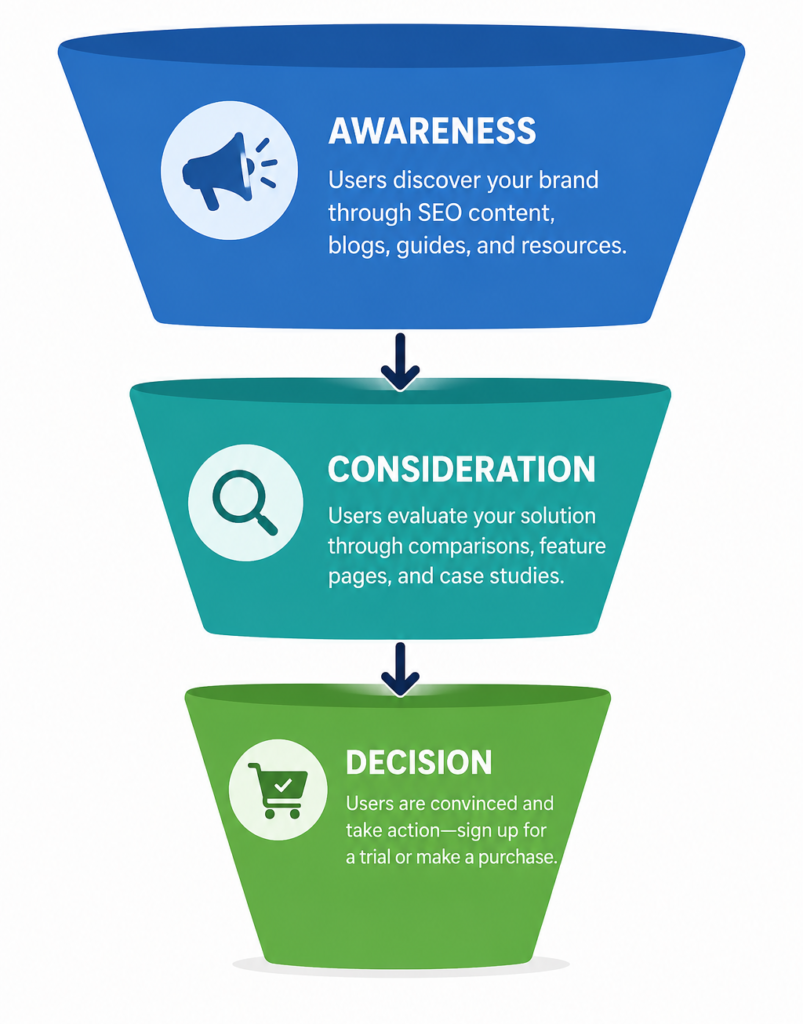
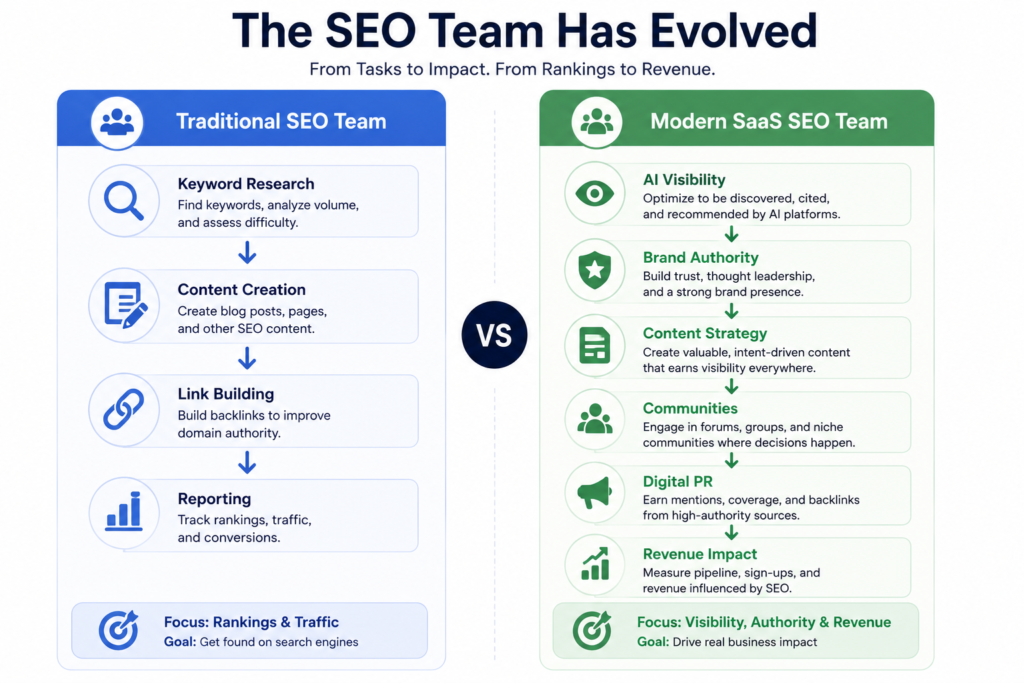
For years, SaaS SEO strategies followed a familiar structure.
Traditional SaaS SEO Funnel
Traditional Marketing Funnel – Image is AI generated, Illustration purpose only
Most SEO teams focused on:
Driving traffic
Ranking keywords
Creating comparison content
Optimizing product pages
This model worked because search engines were usually the first touchpoint.
A user searched.
A website appeared.
A visit happened.
The research journey began.
Today, that sequence is changing.
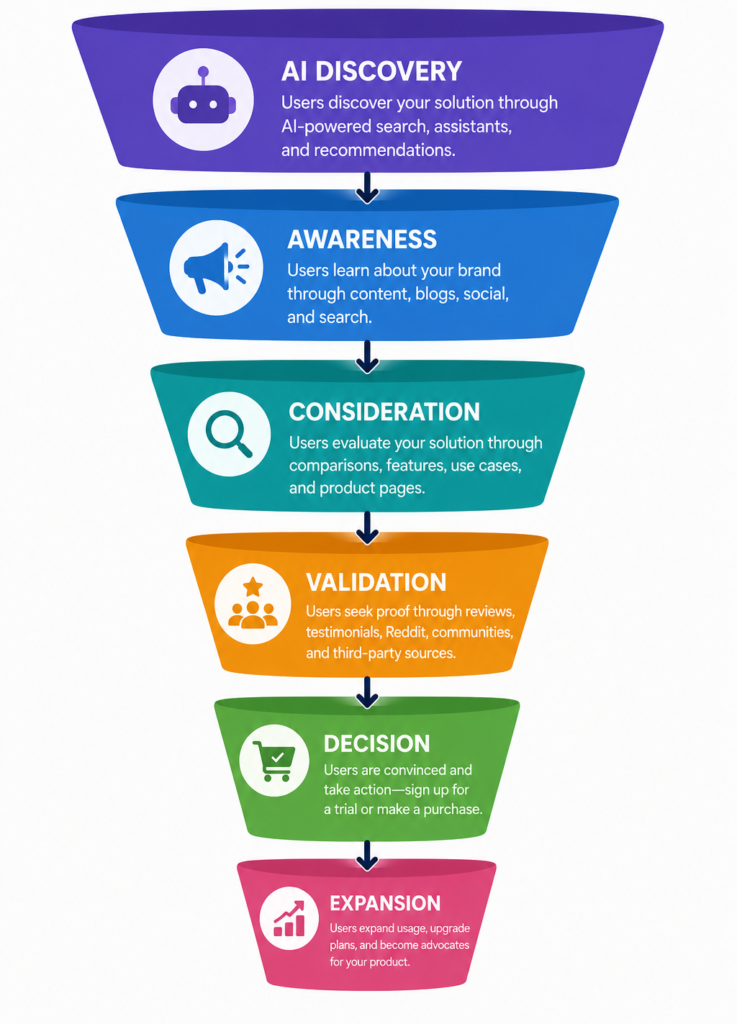
The AI-Driven SaaS Funnel
AI driven Marketing Funnel – Image is AI generated, Illustration purpose only
The two new stages are:
Stage 1 : AI Discovery (New)
This is where the biggest shift is happening.
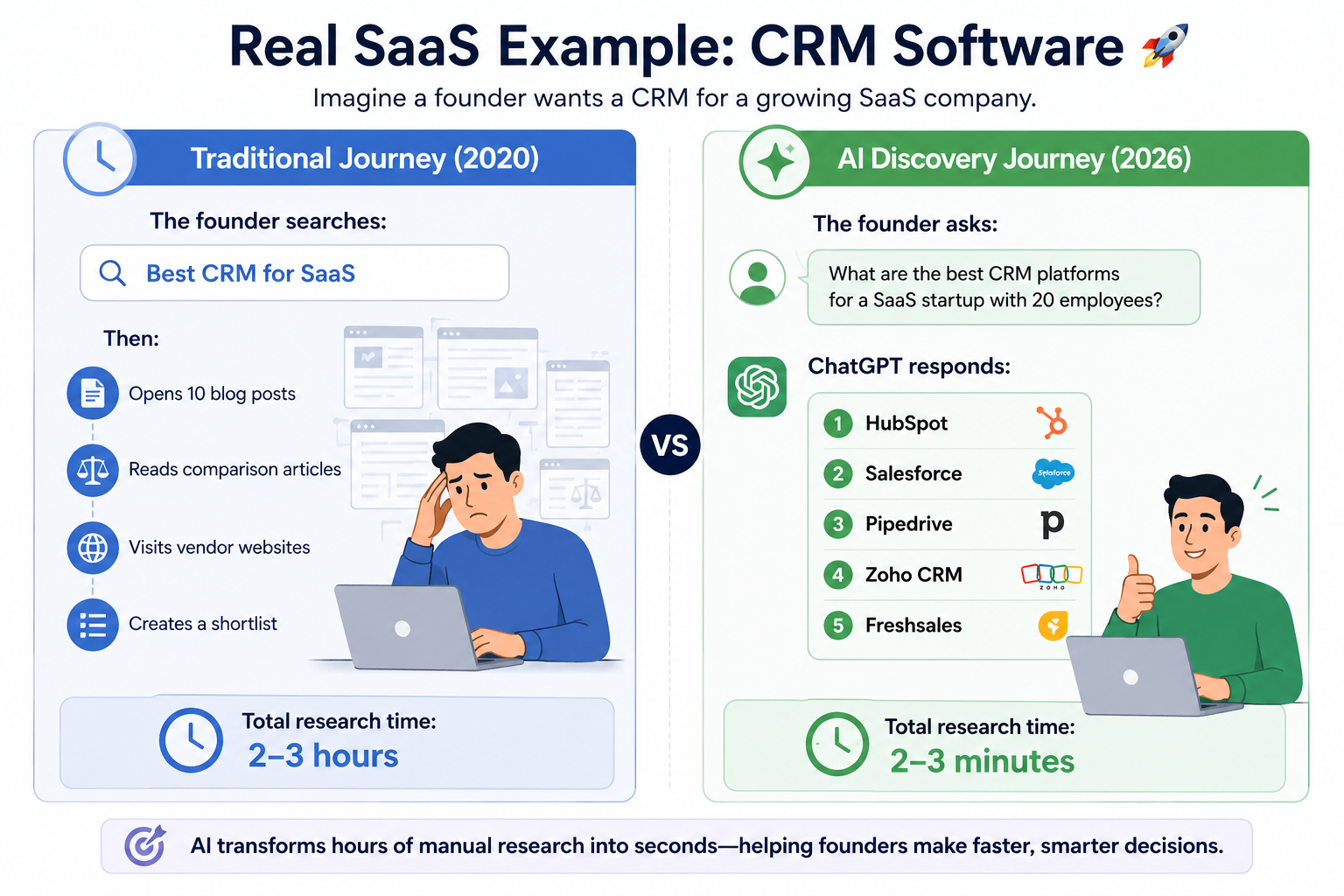
Traditionally, a buyer searching for software would type:
“Best CRM for SaaS”
and visit multiple websites.
Today, many buyers start with prompts like:
Best CRM for startups
Compare HubSpot and Salesforce
Which CRM is easiest to implement?
Best CRM for small SaaS companies
Instead of receiving ten blue links, they receive an answer.
The shortlist is often created before the first website visit.
Traditional and AI Journey of the Visitors – Image is AI generated, Illustration purpose only
Stage 2: Awareness — From Rankings to Recognition
At the awareness stage, users are learning.
Examples include:
What is CRM software?
What is technical SEO?
What is customer onboarding?
Previously, success was measured through:
Rankings
Impressions
Clicks
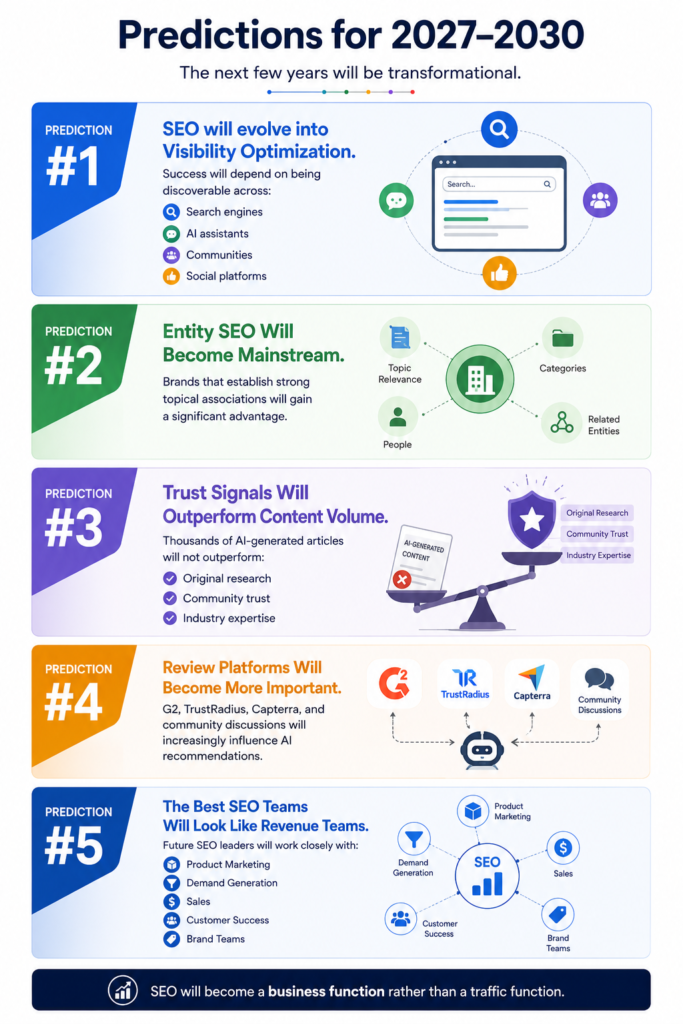
Now awareness is becoming a visibility challenge.
New Awareness KPIs
Old KPI
New KPI
Clicks
Mentions
Rankings
AI Citations
Sessions
Brand Visibility
CTR
Share of Voice
Example: Imagine your SaaS company ranks #3. If AI tools consistently cite your brand when answering questions, you may influence more decisions than a competitor ranking #1. This is why entity-based SEO, structured content, and topical authority have become increasingly important.
Stage 3: Consideration — How AI Is Changing Product Comparisons
The consideration stage has historically been one of the most important areas for SaaS SEO.
This is where potential buyers ask questions such as:
HubSpot vs Salesforce
Ahrefs vs Semrush
ClickUp vs Asana
Best CRM for SaaS startups
Best project management software for remote teams
Traditionally, buyers would visit multiple websites, read blog posts, compare feature pages, and spend hours researching.
Today, AI has dramatically compressed this process.
A buyer can ask ChatGPT or Perplexity:
Compare HubSpot, Salesforce, and Pipedrive for a SaaS company with 50 employees.
Within seconds, they receive a detailed comparison table.
Editorial Note: Some parts of this article were created with the support of AI tools. Every section has been reviewed and edited by Virendra Singh to ensure accuracy, clarity, and value.